Rain is way more fun when I'm running.
I call it my 'free coolant' then, and take it as a challenge.
I actually feel energized by the sheer knowledge this will demoralize many a participant, thus giving an edge to whoever doesn't care or benefits from it.
Yet, I started noticing how annoyed I am when it rains while I'm walking around the city.
It resonated with thoughts picked up in Antifragile (Taleb 2012) about stressors and context-dependence.
Curious about their relationship, I diged up a couple studies that quickly revealed both stress and excitement have the same physiological cues, yet drastically different results.
The effect of stressors is largely determined by our beliefs about stress itself. People believing stress to be enhancing and helpful for growth and performance have more adaptative physiological and behavioral responses than those believing stress is debilitating, harmful and must be avoided (Crum 2013).
Mental reframing alone can be enough to benefit from the positive effects of stress, even though no meaningful physiological divergence was found between the two (Brooks 2014).
I submit that post-traumatic stress and post-traumatic growth must follow the same pattern. Framing an event as a challenge or a danger may very well be what separates growth from harm (provided one's physical integrity is not threatened in the process, of course).
Put differently, stressors act as sources of energy and motivation only if you allow them to. I once heard you can’t compete with someone who's having fun. I believe it's true.
Framing matters.
## Dealing with Chronic Stress
The consequences of *chronic* stress, however, differ widely from those of episodic stressors.[^1] They tend to be much more detrimental.
In the Chinese water torture, one drop of water falling onto one's head over a long period of time is enough to cause mental deterioration.
Working with a lousy colleague or boss will harm you much more than running into your toxic ex once (remembering, of course, that we're all somebody's lousy colleague or toxic ex.)
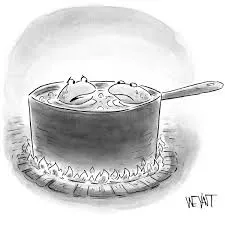
Chronic stress is a bit like boiling frogs.
The water feels warm, so they relax.
Soon enough, though, they end up on some tourist's plate in Paris who thinks this is what the French must eat.[^2]
Best to live the water on time.
[^1]: It's worth noting our ability to make the episodic into chronic stress by mulling over it.
[^2]: Don't quote me on that, but I'd rather eat tree roots than frogs.